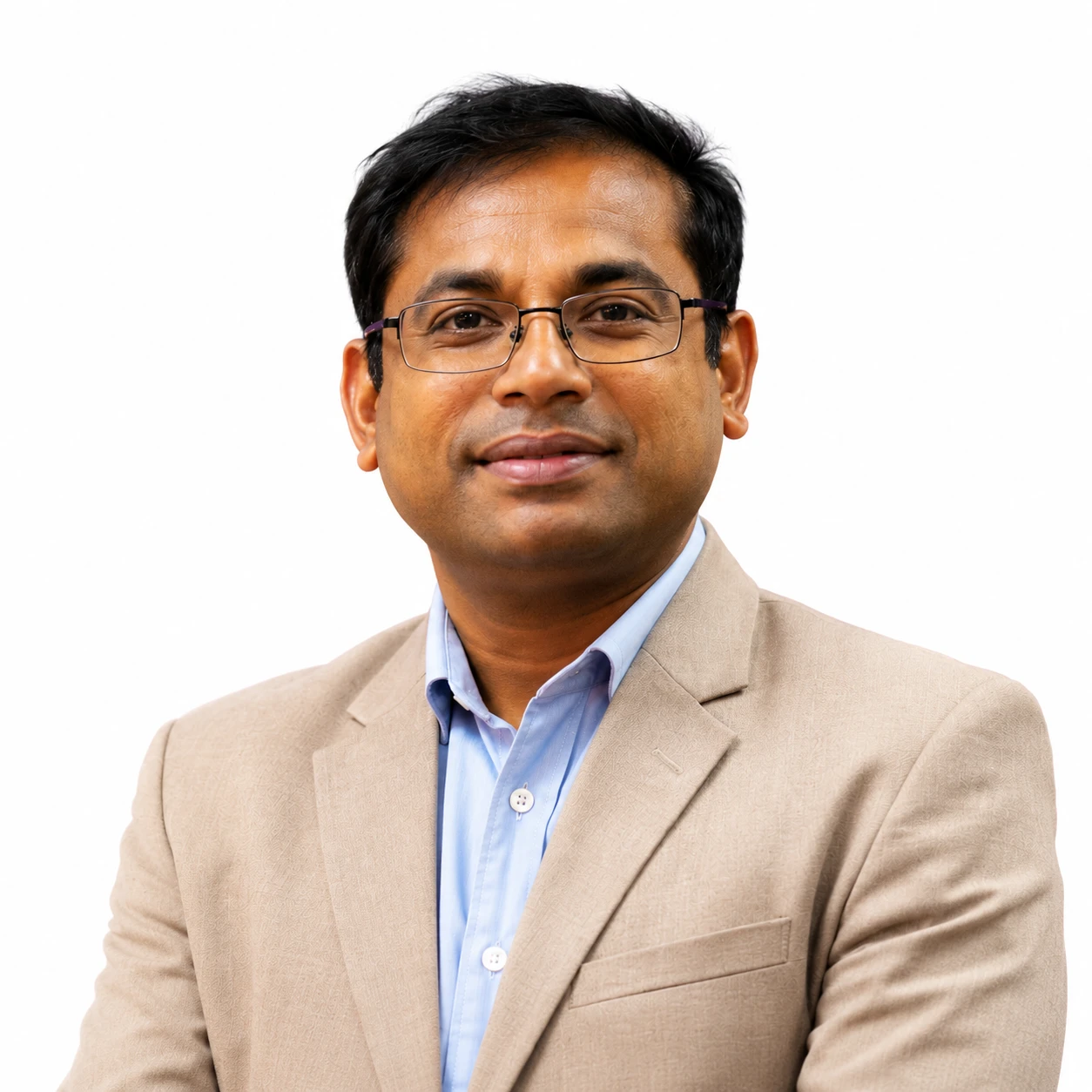
Associate Professor · Center for Cyber Security
Faculty of Information Science & Technology, Universiti Kebangsaan Malaysia (UKM)
Cybersecurity and AI researcher at the intersection of smart grids, federated learning, IoT security, and 5G/6G networks. Head of the Network & Communication Technology Lab at UKM Malaysia. Recognized five consecutive years by Stanford & Elsevier as a Top 2% Scientist worldwide.
I am Assoc. Prof. Dr. Mohammad Kamrul Hasan, a cybersecurity and artificial intelligence researcher at the Center for Cyber Security, Faculty of Information Science and Technology, Universiti Kebangsaan Malaysia (UKM).
Recognized as a Top 2% Scientist Worldwide by Stanford University and Elsevier for five consecutive years (2021–2026), my research focuses on smart grid cyber-physical systems, federated learning, IoT security, and 5G/6G network resilience.
Currently serving as Head of the Network and Communication Technology Lab, I lead interdisciplinary teams tackling real-world cybersecurity challenges in healthcare, energy infrastructure, and industrial networks. My research has been funded by MOHE, MOSTI, British Council UK, and international collaborators from Turkey, China, and Australia.
I actively supervise PhD and MSc candidates and welcome applications from prospective students and collaborators working at the intersection of cybersecurity, AI, and networked systems.
Two decades of academic, research, and industry experience across Malaysia and beyond.
Snapshots from the lab, conferences, field visits, and research milestones.
Active research projects, grant proposals, and current lab pursuits.
Advancing security and intelligence across critical infrastructure, wireless networks, and AI systems.
Comprehensive cyber-physical security frameworks protecting smart grid infrastructure from advanced persistent threats and zero-day exploits.
Privacy-preserving distributed machine learning for IoT and industrial networks, combining federated learning with blockchain cryptography.
Resource allocation, interference mitigation, and handover optimization with security-first architecture for next-generation mobile networks.
Secure protocols and lightweight authentication for Internet of Medical Things devices, protecting patient privacy in telehealth systems.
AES cryptographic blockchain systems and quantum-resistant post-quantum protocols for securing industrial data and supply chain integrity.
End-to-end IoT security frameworks for smart manufacturing, warehouse management, and Industry 4.0 ecosystem integration.
Global recognition in research excellence, intellectual property, and citation impact.
High-impact publications in Q1 journals — IEEE, Nature, Elsevier, ACM, and Springer.
Leading and co-investigating major grants from national and international funding bodies.
Spanning security tools, AI frameworks, network simulation, and hardware platforms.
Open to research collaborations, speaking invitations, and postgraduate supervision opportunities.